 Research
Drone warfare in space: Swarms of autonomous, laser-shooting cubesats could defend Western satellites in orbit
The U.K. startup Shield Space is racing to apply the lessons of drone warfare in Ukraine to develop swarms of up to 100 autonomous, satellite-defending cubesats.
 Research
Southern Taurid meteor shower could bring fireballs this week — when and where to look
The best time to see meteors during the Southern Taurid meteor shower is coming up soon.
 Research
Don't miss out on 'Dark Matter' — this early Black Friday NordVPN deal has up to $386 off, meaning you can stream the latest sci-fi series from anywhere
NordVPN is recommended as one of the best VPN services, offering privacy, online security, and convenience and is now up to 78% cheaper.
 Research
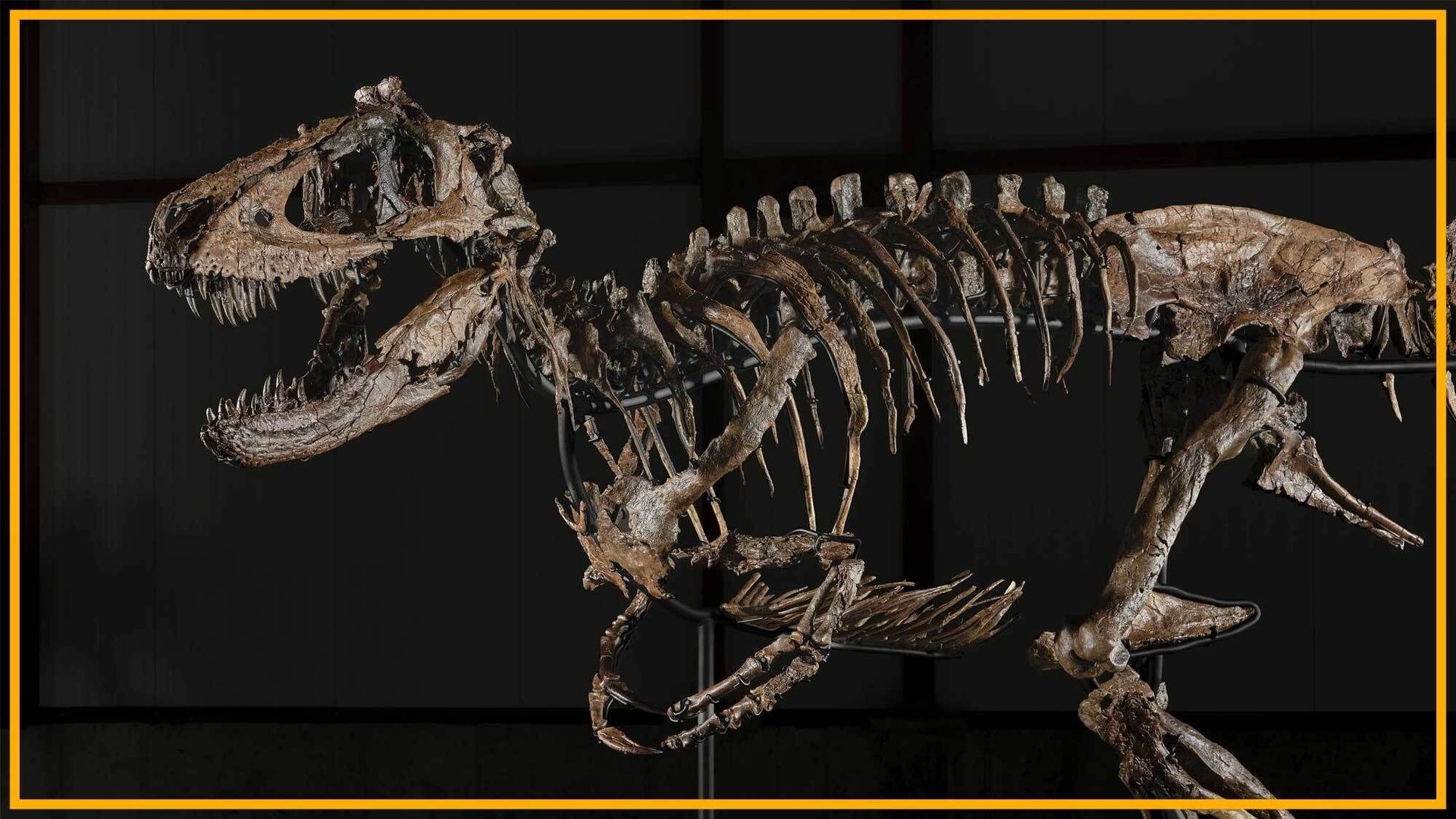
When dinosaurs are sold to the highest bidder, we all lose
The sale of the Nanotyrannus "Jodi" for over $47 million shines a stark light on the commodification of Earth's history, say Kristi Curry Rogers and Lindsay Zanno.
 Research
The Taurid meteor shower peaks tonight — and fireballs could steal the show
The Taurid meteor shower could spawn dazzling fireballs in the coming weeks! Here's when and where to look.
 Research
Mom experienced 'extreme unhappiness' only when she breastfed
A new mom experienced intense feelings of sadness whenever she breastfed.
Community detection in complex networks via node similarity, graph representation learning, and hierarchical clustering
arXiv:2303.12212v3 Announce Type: replace-cross Abstract: Community detection is a significant challenge in analysing real graphs, including social, citation, biological, and many other networks. This article proposes three new, general, hierarchical frameworks to deal with this task. The introduce
From Fragmentation to Fusion: A Survey and Roadmap for Omnimodal Embeddings
arXiv:2611.00172v1 Announce Type: new Abstract: Embedding models underpin virtually every modern AI system, from search engines to recommendation systems. Despite shared mathematical foundations, research on embedding models remains fragmented by modality: the communities develop largely in isolati
MEMENTO: Learning Context Management for Long Context Processing Agents
arXiv:2611.00244v1 Announce Type: new Abstract: LLM agents that operate over long inputs must perform context management: deciding what to retain in a fixed-size context window. A common approach is compaction, where the model replaces its history with a self-generated note. Yet off-the-shelf agent
Cross-Lingual Persona Effects in LLM Negotiation
arXiv:2611.00300v1 Announce Type: new Abstract: Tell an LLM negotiator to be "headstrong" and it should hold firm on price, but does that instruction retain the same behavior in every language? To test this, we use identical buyer and seller instances of Gemini 3.6 Flash to negotiate the same 12 Cr
GAVAGAI: Referential Alignment for Infant-Scale Vision-Language Models via Balanced Optimal Transport
arXiv:2611.00319v1 Announce Type: new Abstract: A child learns which words name which things from roughly 100 million words of input. Vision-language models trained at a comparable scale bind words to referents far less reliably, and we argue that part of the gap is structural: the usual next-token
Queering the Audits: Community-Based Auditing of AI Harms to Queer Communities
arXiv:2611.00345v1 Announce Type: new Abstract: AI systems embed majority-group defaults into training data, evaluation metrics, and category definitions, producing documented harms for queer communities including erasure, misclassification, and discrimination. Standard technical audits often rely
Cross-Prompt Reuse of Entity-Replacement Responses
arXiv:2611.00352v1 Announce Type: new Abstract: With model weights fixed, we measure how much of an entity-replacement response transfers between English factual questions, beyond whether answers change. We add the hidden-state change from two source questions to a target question about the same en
Humanized but Still True? Auditing Facts and Detection in AI-Text Humanizers
arXiv:2611.00359v1 Announce Type: new Abstract: AI "humanizers" rewrite machine-generated text so that detectors classify it as human-written. Public leaderboards score evasion and embedding similarity, but not whether checkable details survive. We check whether numbers, dates, person and organizat
Circuit Oracle: Automating Attribution Graph Analysis via Natural-Language Queries
arXiv:2611.00420v1 Announce Type: new Abstract: Attribution graphs, an emerging tool in mechanistic interpretability, use transcoders to decompose language model computations into sparse interpretable features connected by causal edges. However, turning a graph into a safety-relevant insight requir
Fidelity Collapses with Table Size, Not Turn Count: Delivery Architecture in a Deployed Tool-Using Agent
arXiv:2611.00442v1 Announce Type: new Abstract: When a multi-turn agent delivers a tool's structured records into the model's context and re-emits them each turn, every turn can corrupt data the tool computed correctly. We measure this in a production award-travel agent: two architectures over iden
From Lookups to Lessons: Turning Retrieved Knowledge into Parametric Memory
arXiv:2611.00450v1 Announce Type: new Abstract: Retrieval-augmented generation (RAG) helps large language models (LLMs) answer factual questions beyond their training data, but it adds storage and inference costs. Distilling previously retrieved information into parametric memories enables reuse wi
Steering Readerly Dynamics: Trajectory-Guided Story Generation with Large Language Models
arXiv:2611.00469v1 Announce Type: new Abstract: Large language models (LLMs) are increasingly used to generate stories, but these stories struggle to reproduce engaging readerly dynamics, the evolving reader responses that shape narrative experience. To address this challenge, we propose a framewor
Spotting the Artificial: Dialogic Humor Improvisation in Humans and LLMs
arXiv:2611.00492v1 Announce Type: new Abstract: We propose a methodology for investigating the differences between natural and synthetic language in a challenging setting: humorous improvisational dialogue. Our experimental setting compares human-produced comedy improvisations with the dialogues ge
AStockArena: Beyond Returns, Can We Entrust Real Capital to the Decisions of Financial Agents?
arXiv:2611.00515v1 Announce Type: new Abstract: Large language models (LLMs) are increasingly used in dynamic financial trading, yet real-time trading benchmarks mainly evaluate agents by cumulative returns and risk-adjusted performance. Such outcome metrics cannot show whether trades are faithfull